Generate Revocable Living Trust
A revocable living trust is a legal document that allows you to place your assets in a trust while retaining control during your lifetime. It avoids probate, keeps your affairs private, and allows for easy distribution of assets to your beneficiaries.
Generate your Revocable Living Trust
Answer a few simple questions to generate your document.Last Updated April 2026
What is a Revocable Living Trust?
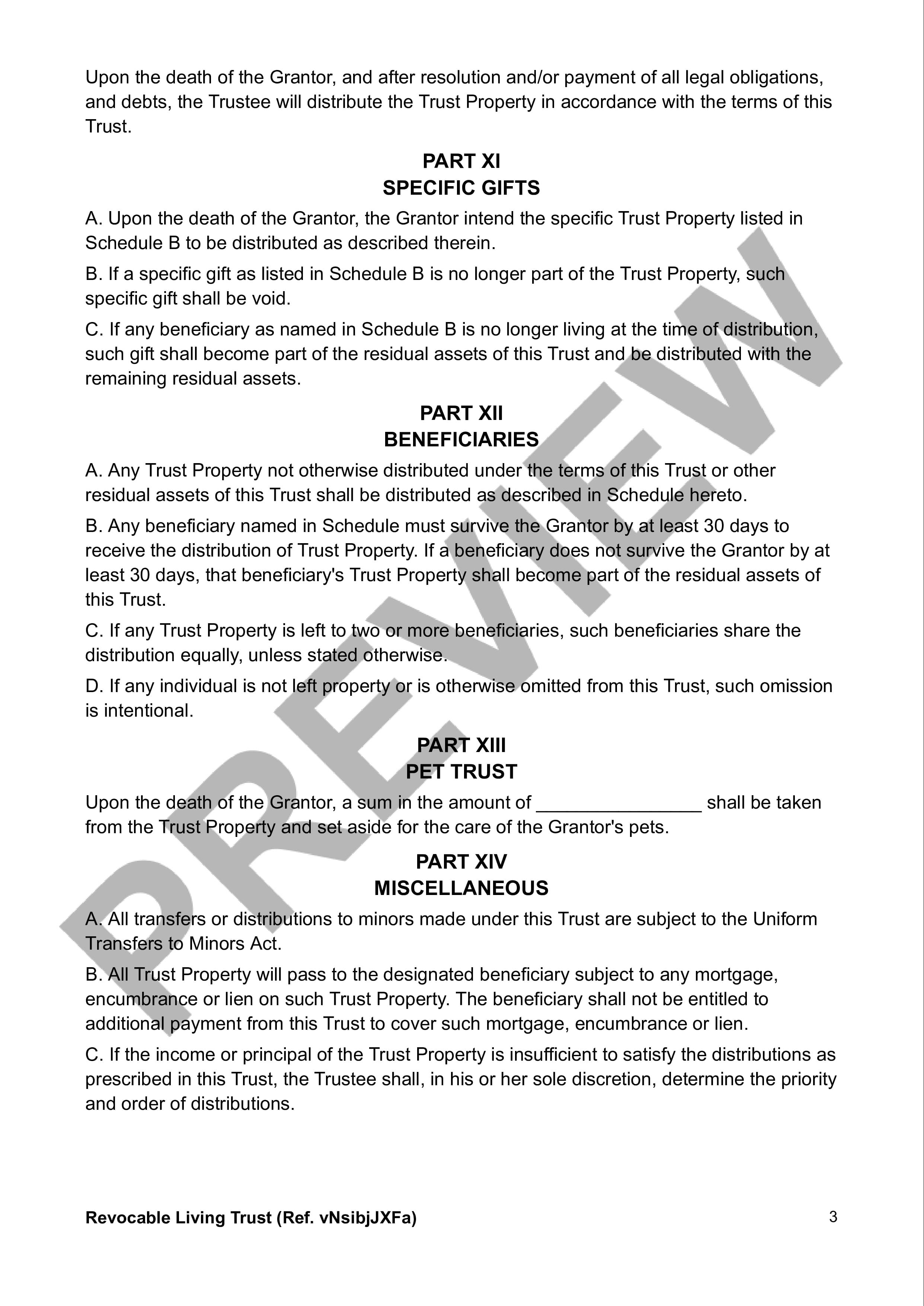
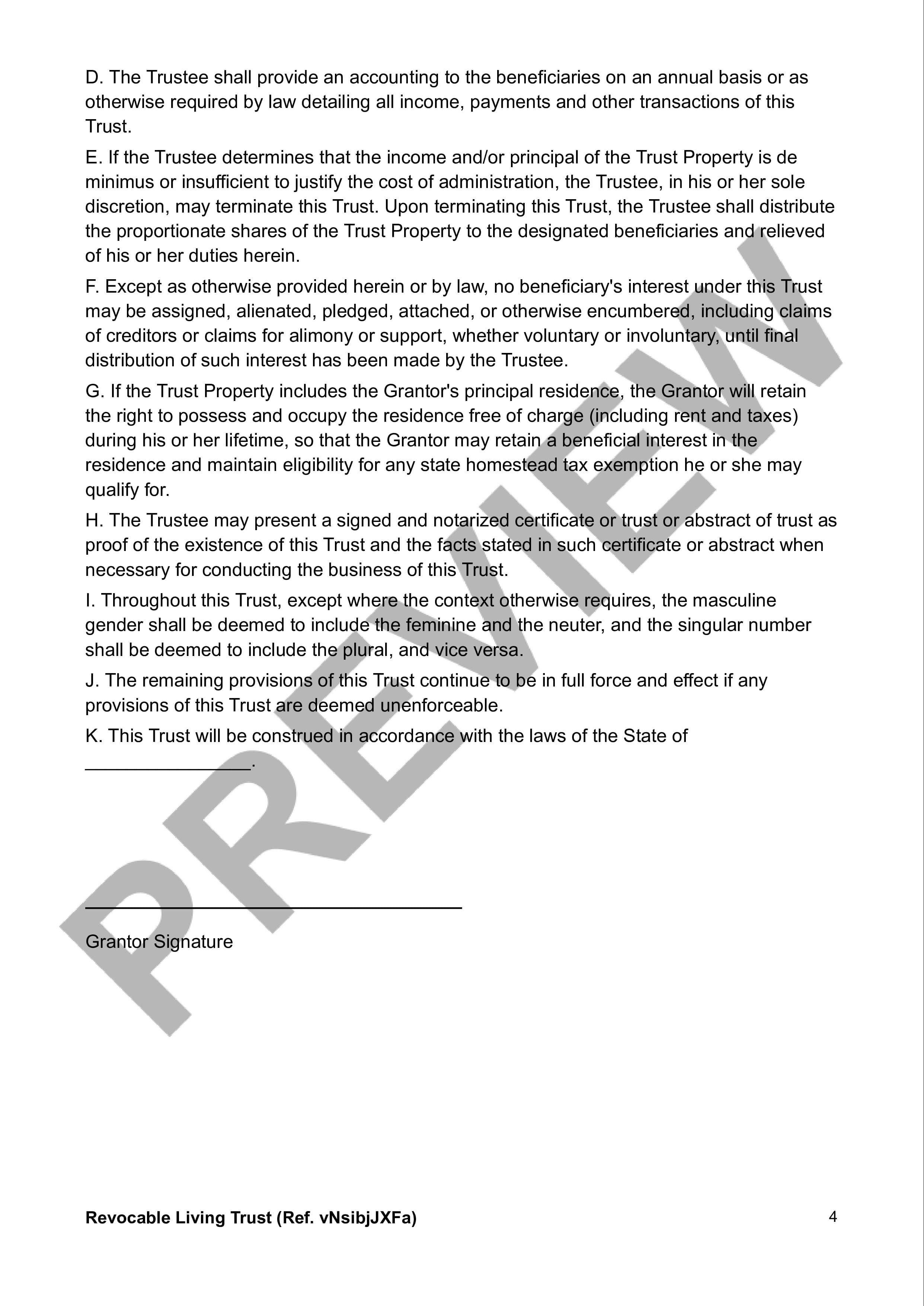
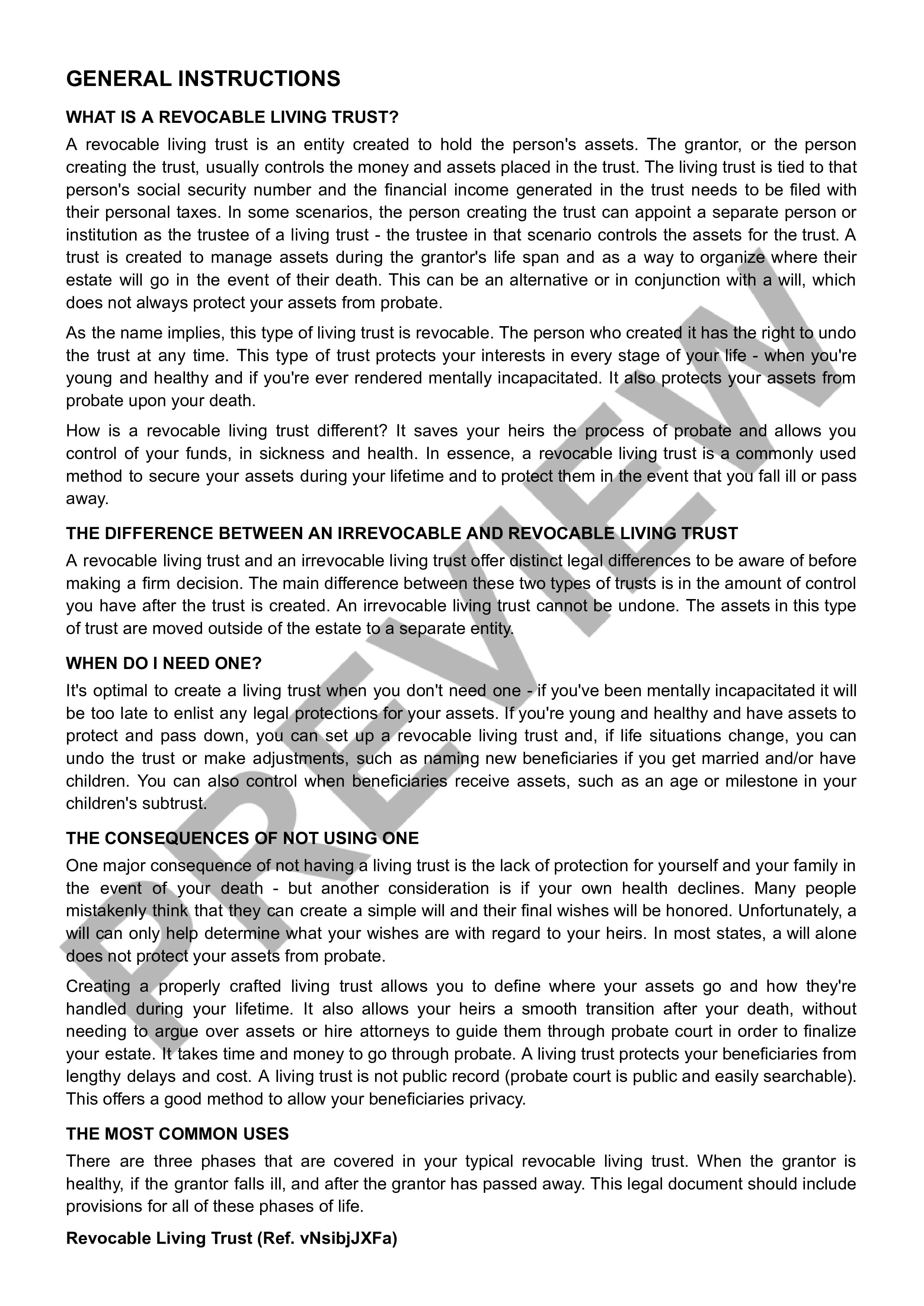
A revocable living trust is a legal arrangement in which you (the grantor) transfer ownership of your assets to a trust while retaining full control over them during your lifetime. As the grantor, you typically serve as your own trustee and can modify, amend, or revoke the trust at any time. Upon your death or incapacity, a successor trustee takes over and distributes the assets according to your instructions, bypassing the probate process.
Benefits of a Revocable Living Trust
Avoids probate: Assets in the trust pass directly to beneficiaries without going through probate court, saving time and money.
Privacy: Unlike a will, a living trust is not a public record, keeping your estate details private.
Incapacity planning: If you become incapacitated, your successor trustee can manage the trust assets without court intervention.
Flexibility: You can change or revoke the trust at any time while you are alive and competent.
Multi-state property: Avoids probate in multiple states if you own real estate in more than one state.
Frequently Asked Questions
A revocable trust can be changed or cancelled by the grantor at any time during their lifetime. An irrevocable trust generally cannot be changed once it is created and the assets are transferred, offering greater asset protection and potential tax benefits but at the cost of control.
Yes, it is still advisable to have a "pour-over will" alongside your living trust. A pour-over will catches any assets that were not transferred to the trust during your lifetime and directs them into the trust upon your death. It also allows you to name a guardian for minor children.
Requirements vary by state, but most states require the grantor to sign the trust document in the presence of a notary public. Some states also require witnesses. It is essential to comply with your state's specific requirements to ensure the trust is legally valid.
A trustee is a person or institution that manages the assets of the trust on behalf of the grantor and beneficiaries. In most revocable living trusts, the grantor serves as their own trustee during their lifetime. A successor trustee takes over upon the grantor's death or incapacity.