
A standard (non-durable) power of attorney ends the moment the principal becomes incapacitated, while a durable power of attorney remains valid during incapacity, continuing until death, revocation, or a stated end date. “Durable” does not change what the agent can do; it only determines whether that legal authority survives the principal’s loss of capacity.
Most modern estate plans default to durable financial powers of attorney so a chosen agent can keep paying bills, managing bank accounts, and dealing with financial institutions without court intervention.
Table of Contents
- Durable Power of Attorney vs. Power of Attorney: The Core Difference
- How Durability Affects Your Estate Plan in Real Life
- What “Durable” Means Legally
- Durable vs Non-Durable: How Incapacity Changes Everything
- When a Non-Durable Power of Attorney Still Makes Sense
- How to Tell if Your Existing Power of Attorney Is Durable
- Can You Make a Power of Attorney Durable After It’s Signed?
- Durable Powers of Attorney, Bank Accounts, and Financial Institutions
- Durable Financial Powers vs. Health Care Powers in Your Estate Plan
- State-by-State Differences in Durable Power Language
- Should You Always Choose a Durable Power of Attorney?
- Key Takeaways
- FAQ
- Can I revoke a durable power of attorney if I change my mind?
- Does a durable power of attorney need to be notarized or witnessed?
- Will another state honor my durable power of attorney if I move?
- Can I appoint more than one agent under a durable power of attorney?
- When should my durable power of attorney take effect—now or only at incapacity?
Durable Power of Attorney vs. Power of Attorney: The Core Difference

The main difference between these two powers of attorney is their effectiveness during incapacity. Both documents grant a trusted person—sometimes called an attorney-in-fact—the right to act on your behalf in legal and financial matters.
Both powers of attorney end automatically upon the death of the principal. But what happens when the principal can no longer make their own decisions is where the two paths split sharply.
The table below captures the key differences at a glance.
| Feature | Non-Durable POA | Durable POA |
|---|---|---|
| When authority ends | At incapacity, revocation, or death | At revocation or death |
| Can an agent act after incapacity? | No | Yes |
| Court intervention needed? | Often yes, guardianship is required | Usually no |
| Typical use case | Short-term, specific transactions | Long-term incapacity planning |
Understanding which type you hold—or need—can be the difference between a seamless transition and a time-consuming, expensive trip to probate court.
Standard (Non-Durable) Power of Attorney
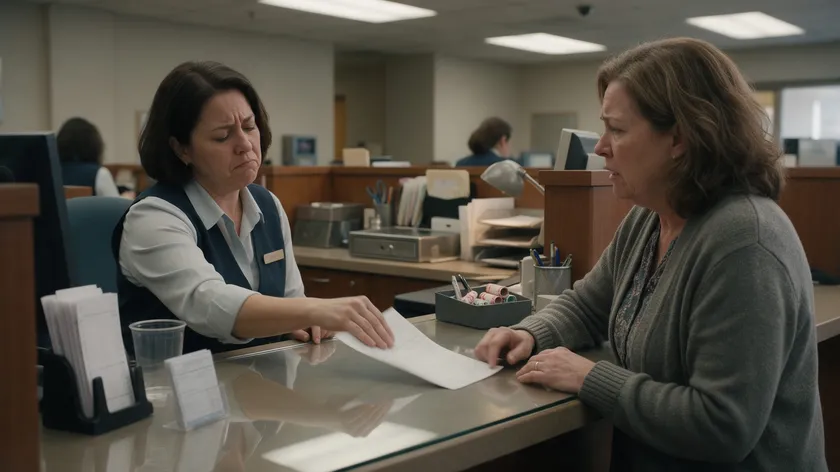
A standard or regular power of attorney grants your agent broad authority to handle financial affairs, sign documents, or manage property on your behalf. However, that authority automatically stops the moment you become mentally incapacitated—whether from a stroke, coma, or advanced dementia.
Once a general power of attorney ends this way, banks will refuse transactions, and your agent loses the ability to act. A general power of attorney ends if the principal becomes incapacitated, full stop.
Durable Power of Attorney

A durable power of attorney does everything a standard one does, but the attorney continues to function even after the principal’s incapacity. If a 78-year-old signs a durable financial power of attorney and later suffers a stroke, the agent’s authority carries on covering bills, financial management, and everyday financial decisions.
Under the same circumstances with a non-durable document, the attorney ends, and family members may be forced to petition a court for a court-appointed guardian.
If you need a broader introduction to what a power of attorney means—the roles and how it starts and ends—see our separate “What Does Power of Attorney Mean?” guide. This article goes deep on the single question that matters most: does the document stay valid when you need it most?
How Durability Affects Your Estate Plan in Real Life
Think of durability as a “stress test” for your estate planning documents. A power of attorney works perfectly well on a normal day, but the real question is whether it still works on the worst day—when you can’t manage your own affairs.
A durable power of attorney is ideal for long-term incapacity planning and emergencies. During incapacity, a durable financial power of attorney lets your trusted agent handle concrete tasks: paying the mortgage and utilities, accessing bank accounts, managing retirement distributions, signing tax returns, working with insurance companies, and even helping to sell property if needed.
Creating a durable power of attorney is a proactive planning tool that keeps your financial matters moving without a gap.
By contrast, a general POA without durable language might be used for convenience—say, while you’re traveling abroad—and then silently “switch off” the moment incapacity strikes.
Durable powers of attorney are now standard tools alongside wills and trusts because they dramatically reduce the need for emergency guardianship proceedings.
A durable power of attorney prevents costly guardianship proceedings and ensures your wishes are followed during incapacity.
For adults over 50, updating an older POA to a durable form is often one of the highest-impact estate plan updates you can make. Durable powers of attorney are crucial for long-term estate planning and are commonly used when illness or cognitive decline is a concern.
What “Durable” Means Legally
“Durable” is a statutory term. It means the agent’s authority is not affected by the principal’s subsequent incapacity. A durable power of attorney must explicitly state its durability in many jurisdictions—using specific language such as “this power of attorney shall not be affected by my subsequent disability or incapacity.”
Without explicit language stating survival through incapacity, a power of attorney defaults to being non-durable in states that haven’t adopted the modern uniform act.
The Uniform Power of Attorney Act (UPOAA), drafted in 2006, flipped the default. In roughly 31 states plus D.C. that have adopted the UPOAA, a power of attorney is presumed durable unless the document explicitly says it terminates at incapacity.
State laws can affect the terminology and requirements for durable powers of attorney, so the specific wording you need depends on where you live.
Consider two contrasting examples. In Hawaii, under Haw. Rev. Stat. 551E-3, a POA is durable by default—you’d have to opt out of durability. In South Carolina, a power of attorney is durable by default unless stated otherwise.
But in Florida, under F.S. §709.2104, durability must be expressly stated; without the statutory language, authority ends upon the principal’s incapacity. Florida also requires two witnesses and a notary for execution, regardless of durability.
A durable power of attorney must be in writing. Durable powers of attorney often require specific statutory language to remain valid during incapacity, and a quick check with a local estate planning attorney or your state bar association can confirm which rules apply in your jurisdiction.
Durable vs Non-Durable: How Incapacity Changes Everything

Incapacity means being legally unable to understand or communicate decisions—often because of Alzheimer’s disease, a traumatic brain injury, a severe stroke, or another serious illness. When someone becomes mentally incapacitated, every legal document they hold is tested against that reality.
Here’s a realistic scenario. In 2026, a 78-year-old named Robert suffers a sudden stroke. His daughter holds a general power of attorney he signed in 2014. That general POA? It’s non-durable. The moment Robert loses mental capacity, his daughter’s authority vanishes.
His bank freezes access. She can’t pay bills, manage property, or handle his financial affairs. The family is now looking at petitioning the court for guardianship—a process that’s expensive, public, and slow. A DPOA helps avoid court-appointed guardianship during incapacity.
Now imagine Robert had signed a durable power of attorney instead. His daughter’s authority continues seamlessly through his incapacity. She pays his mortgage, manages his investments, files his tax returns, and coordinates with financial institutions—all without stepping inside a courtroom.
A durable power of attorney remains valid during incapacity, which is the key part that changes everything.
If no durable POA exists when incapacity hits, families are usually forced toward court intervention to get authority—a process that can take weeks or months and cost thousands of dollars.
When a Non-Durable Power of Attorney Still Makes Sense
While durable POAs are the backbone of most estate plans, there are limited situations where a non-durable or narrowly scoped general power of attorney is appropriate. General powers of attorney are often used for short-term needs.
Typical use cases include a one-time real estate closing while the principal is overseas, a short-term business transaction, or authorizing an accountant to sign a specific tax return in 2026. These are situations where the principal has full mental capacity and simply needs someone to act on their behalf temporarily.
General and durable powers can coexist. For example, someone might have a broad durable financial POA for long-term protection plus a separate, very specific non-durable POA for a single deal.
A non-durable power of attorney generally ends when the specified task is done, the principal revokes it, or the principal becomes incapacitated.
Choosing the right power of attorney is crucial for estate planning. For long-term planning around aging, chronic illness, or cognitive decline, a non-durable POA is usually not sufficient protection on its own. It’s a personal decision that depends on your goals, but pairing a non-durable POA with a durable one is a common approach.
How to Tell if Your Existing Power of Attorney Is Durable

Many readers signed a POA years ago and now need to verify whether it actually stays valid through incapacity. Here’s how to check.
Look for durability clauses in your document. Phrases like “this durable power of attorney,” “shall not be affected by my subsequent incapacity,” or “remains in effect notwithstanding my disability” signal durability. If the document includes that specific language, the attorney remains effective through incapacity.
The absence of durability wording does not always mean it’s non-durable. Under UPOAA-style laws, the document might still be presumed durable—but only a state-law-aware review can confirm this. Checking the execution date matters too, because POAs signed before your state adopted the UPOAA may follow older rules.
Concrete steps to verify:
- Check the execution date on the document
- Identify the state whose law is named or where it was signed
- Compare that to current state statutes or consult local attorneys who practice in this area
Older forms—especially those signed before roughly 2010—are more likely to be non-durable or missing modern statutory references and may be worth replacing with a new power of attorney.
Can You Make a Power of Attorney Durable After It’s Signed?
In nearly all cases, you cannot simply “add” durability to an already-signed non-durable power of attorney by penciling in new language or attaching a separate page. The document must explicitly state it is durable at the time of execution.
The legal reason is straightforward: a POA’s scope and durability are locked in at signing. Material changes require executing a new document with the same formalities—it must be signed by the principal and notarized, and in many states two witnesses are required to validate the document.
You can’t retrofit durability any more than you can change the terms of a signed contract without both parties agreeing.
The correct process: while the principal still has mental capacity and is of sound mind, revoke the old POA in writing and sign a new durable power of attorney that clearly states its durability and effective date.
If the principal has already lost capacity and only holds a non-durable POA, they generally cannot now sign a durable POA—leaving guardianship or conservatorship as the likely route. This is why durability must be decided before there is any question about capacity, not after a diagnosis or medical crisis.
Durable Powers of Attorney, Bank Accounts, and Financial Institutions

The most common friction point isn’t the legal document itself—it’s whether financial institutions will honor it when the agent needs to access bank accounts. Even a perfectly valid durable POA can hit resistance at the counter.
Many banks insist on seeing an original or certified copy, may scrutinize documents older than a few years, and sometimes request their own internal POA forms. A clearly drafted, durable financial power of attorney signed and notarized according to state law gives agents a much stronger position with banks, brokerages, and insurance companies.
Agents can manage finances and make healthcare decisions under a DPOA, but only if the institution recognizes the document.
Some states have laws penalizing unreasonable refusal to accept a properly executed durable POA, which can be helpful leverage for agents trying to avoid unnecessary court intervention. A durable power of attorney lets your trusted agent walk into a bank with legal backing.
Share copies of your durable POA with key financial institutions in advance. Waiting until the middle of a health crisis to introduce the document makes everything harder and more time-consuming.
Durable Financial Powers vs. Health Care Powers in Your Estate Plan

“Durable” can apply to both financial power of attorney documents and health care decision-making documents, but they are usually separate instruments. A durable power of attorney can cover financial and healthcare decisions, though most states and attorneys recommend keeping them in distinct documents with clear roles.
Durable Financial Power of Attorney
A durable financial power of attorney focuses on managing finances—bank accounts, real estate transactions, investments, insurance claims, and everyday bills—if you become incapacitated. This is the document that lets your agent pay bills, handle your personal and financial situation, and manage property without court involvement.
Durable Health Care Power of Attorney
A healthcare power of attorney—sometimes called a medical power of attorney—authorizes an agent to make treatment decisions, coordinate medical care, and access medical records if you cannot consent.
Health care decisions and medical decisions are entirely separate from financial matters, which is why a single “catch-all” POA rarely covers everything.
A complete estate plan typically includes both durable and general powers, often alongside a will, trusts, and an advance directive or living will. Agents must act in the principal’s best interest at all times, regardless of which document grants them authority.
A durable power of attorney can cover long-term care planning, but you should align your agent choices across documents—deciding whether the same person should hold both financial and medical authority or whether to split the roles among family members.
State-by-State Differences in Durable Power Language
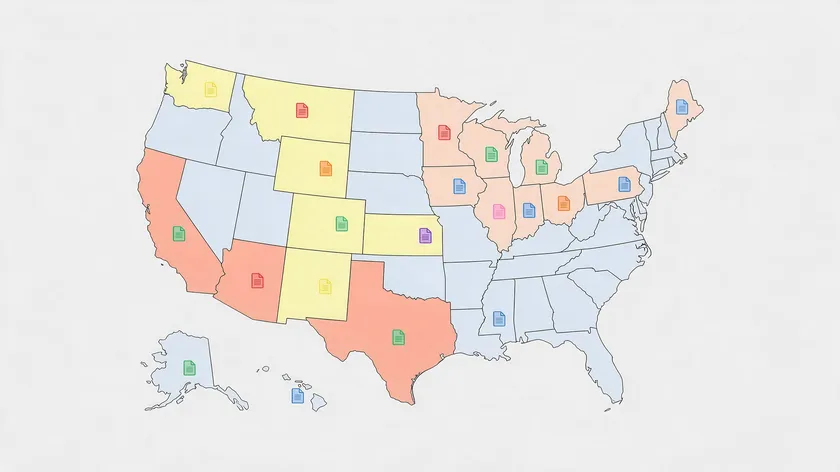
Powers of attorney are governed by state law, so the rules for general power of attorney vs. durable power of attorney can differ significantly by jurisdiction. What works in one state may not stay valid across state lines.
Consider three examples. Under Pennsylvania’s own durable power of attorney statute, durability is presumed unless the document says otherwise. Hawaii reaches the same result under its version of the UPOAA.
But in Florida, you must include specific statutory language for a durable POA, and springing POAs executed after October 1, 2011, are invalid. Kansas offers three options on its official forms: durable immediate, springing durable, or non-durable.
To verify current law in your state, check resources like your state bar association’s website (floridabar.org’s consumer pamphlet is a good example) or the Uniform Law Commission’s UPOAA page. Estate planning is a practice area where staying current on statutes matters—especially since some states changed their defaults in the last 10–15 years.
A general power signed in 2005 may be treated differently from one signed in 2024 in the same state.
Because durability rules are technical and time-sensitive, a quick state-specific review—by consulting local attorneys or your law office—is wise before you rely on any older POA during a crisis.
Should You Always Choose a Durable Power of Attorney?
While many estate planners recommend durable powers of attorney as the default, there are legitimate concerns about misuse that deserve honest discussion. A durable power of attorney is designed for long-term estate planning, but it also grants significant power at a vulnerable time.
Pros of a Durable Power of Attorney
A durable POA provides continuous protection through incapacity, avoids guardianship proceedings, keeps control within the family, and ensures someone can immediately begin managing finances after an accident or diagnosis.
A durable power of attorney ensures that your financial decisions and financial affairs are handled by a trusted agent rather than a court-appointed stranger.
Common Concerns About Durable Powers of Attorney
Common worries include fear of an agent abusing access to funds, discomfort with giving someone broad authority over your financial power today, and uncertainty about whom to trust. These are valid concerns—especially when the principal can no longer oversee the agent’s actions.
Safeguards to Consider
You can limit the scope of durable and general powers, name co-agents or successor agents, require periodic accountings, and choose between an immediate vs. springing durable POA based on family dynamics.
Consulting an estate planning lawyer helps tailor your power of attorney to your exact needs. Many attorneys offer a free consultation to help you make informed decisions.
Here’s a simple decision framework: if your main goal is long-term incapacity planning, durability is usually essential—it’s the right power for the job. If it’s a single short-term transaction, a non-durable POA may be sufficient.
Key Takeaways
- The main difference between a durable and a regular power of attorney is what happens at incapacity: a non-durable POA becomes void the moment the principal can no longer make decisions, while a durable POA carries on, keeping the agent’s authority intact for managing finances, paying bills, and handling legal matters.
- Durable powers of attorney turn a convenience document into a true incapacity-planning tool, especially for managing bank accounts, property, and ongoing financial obligations.
- Many states now presume durability under the UPOAA, but older or out-of-state forms may not—it’s worth confirming whether an existing POA actually stays in force if you lose capacity.
- You generally cannot add durability after signing; a new power of attorney must be executed while you still have mental capacity.
If you’re ready to generate or update a power of attorney, start with a customizable template at Documentify. Laws vary by state, and complex situations warrant personalized legal advice, so consider pairing any template with a review from a qualified attorney.
FAQ
These FAQs address practical issues that come up frequently once you understand the durable vs. non-durable distinction—things like revocation, execution formalities, moving states, multiple agents, and timing.
Can I revoke a durable power of attorney if I change my mind?
As long as you still have legal capacity, you can revoke either a general or durable power of attorney at any time. Do it in writing and notify both the agent and any financial institutions that have copies on file. Once incapacity has been legally established, you may no longer be able to execute a valid revocation; a court intervention might be required instead.
Revoking an old POA should typically be paired with signing a new, updated document so there is no gap in authority during a medical emergency.
Does a durable power of attorney need to be notarized or witnessed?
Most states require financial powers of attorney—especially durable ones—to be notarized, and some also require one or two adult witnesses for validity. Requirements can differ between financial and health care POAs and may have changed over time, so it’s important to follow current state-specific formalities.
Check your state’s statute or bar association guidance before signing to avoid a situation where a bank rejects your POA because formalities were not met.
Will another state honor my durable power of attorney if I move?
Many states will accept an out-of-state durable POA if it was validly executed where it was signed, but local financial institutions sometimes prefer familiar in-state forms.
People who relocate—especially retirees moving in 2026—should ask a local attorney to review their existing POA for any state-specific updates or recommended re-signing. Updating a POA after a move can reduce friction with banks, doctors, and courts in the new state.
Can I appoint more than one agent under a durable power of attorney?
Most states allow multiple agents, either as co-agents acting together or as primary and successor agents acting one after the other. Co-agents provide checks and balances but can cause delays or deadlocks; a single agent is simpler but concentrates power in one person.
Consider family dynamics, trust levels, and practical logistics—like whether agents live in the same state—before deciding on a structure.
When should my durable power of attorney take effect—now or only at incapacity?
An immediate durable POA takes effect the moment it’s signed, while a springing durable POA only kicks in after a defined incapacity event—usually certified by a physician. Immediate durable POAs give agents more flexibility for routine help, such as managing finances while the principal travels.
Springing POAs preserve day-to-day control but can cause delays while incapacity is proven, and some states like Florida no longer allow new springing POAs. Discuss your comfort level and trust in your chosen agent before deciding which durability and timing structure best fits your estate plan.