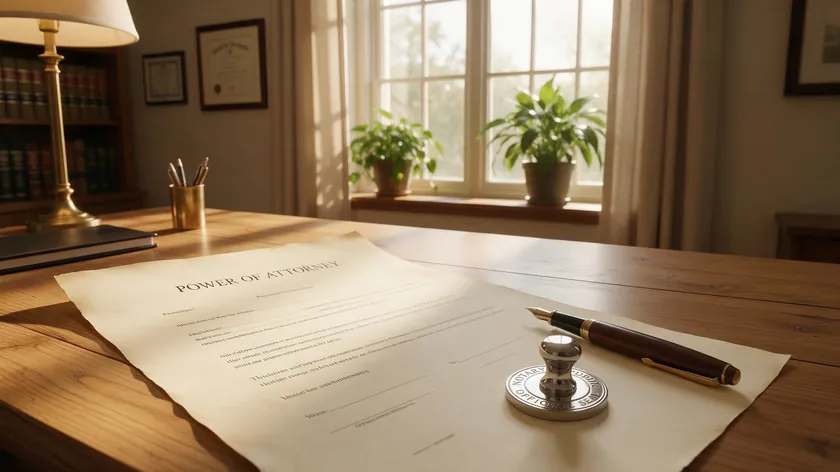
Whether a power of attorney needs to be notarized depends on your state’s law and the type of POA you are creating. Financial and durable powers of attorney almost always require notarization to be legally valid and accepted by banks, government offices, and title companies.
Below, we break down exactly when notarization is required, how it differs from witnessing, and how to get the whole process right.
Table of Contents
- Quick Answer: When Is Notarization Required?
- Notary vs. Witnesses: What’s the Difference?
- How State Law Affects Notarization Rules
- Do Different Types of Power of Attorney Have Different Rules?
- What Happens If Your Power of Attorney Isn’t Notarized?
- How to Properly Notarize a Power of Attorney
- Remote Online Notarization (RON) for Powers of Attorney
- Recording a Notarized Power of Attorney With the Land Records Office
- Institutional Policies: Banks, Insurers, and Health Care Systems
- How Long Does a Notarized Power of Attorney Last, and When Does It End?
- Practical Tips to Avoid Common Notarization Mistakes
- Key Takeaways
- FAQ
- Can I notarize a power of attorney if the principal can’t physically sign?
- Will a power of attorney notarized in one state work in another state?
- Can I add notarization later to an already signed power of attorney?
- Do I need a separate notarized power of attorney for health care decisions?
- Does notarizing a power of attorney give the notary any legal responsibility for the agent’s actions?
Quick Answer: When Is Notarization Required?
Yes, in most cases a power of attorney needs to be notarized. The exact rule depends on your state and the type of document you are signing, but the overwhelming majority of states require notarization for financial and durable POA forms.
Concrete examples illustrate how widely the rules vary. California requires either notarization or two witnesses for a financial power of attorney to be valid. Ohio requires notarization specifically when the POA is used to convey real property or handle real estate transactions.
In New York, two witnesses are required for a power of attorney, and the principal’s signature and the agent’s signature must both be acknowledged before a notary public.
Durable powers of attorney for financial matters almost always need notarization to be accepted by banks, brokerages, and government agencies.
A POA can be valid without notarization in certain states under specific circumstances, but even then, financial institutions usually reject unnotarized documents because of internal risk policies.
It is important to understand the difference between the minimum attorney legal requirements set by statute and the stricter policies imposed by financial institutions or hospitals. A document that passes the statutory bar may still be refused at a bank counter.
For general background, see our “What Does Power of Attorney Mean?” and “Different Types of Power of Attorney” guides rather than re-covering that ground here.
Notary vs. Witnesses: What’s the Difference?

A notary public is a state-commissioned official who verifies the principal’s identity during signing, confirms the person is acting voluntarily and appears of sound mind, and then applies an official seal to the legal document.
Lay witnesses, by contrast, are ordinary competent adults who observe the signing and attest that the principal appeared mentally competent and free from undue influence.
Notarization involves the notary checking a government-issued photo ID, such as a driver’s license, and completing a formal certificate with their seal. Witnessing involves simply being present, observing the act, and adding a signature.
Witnesses must be adults and cannot be the agent. In many states, witnesses must also not be related to the principal or stand to benefit under the POA.
Some states demand both a notary and witnesses for certain POAs. New York’s statutory short-form financial power of attorney is a prime example, requiring notarization plus two disinterested witnesses—though the notary can serve as one of the two required witnesses.
Other states, like California, accept one or the other. Some states require one or more disinterested witnesses in addition to notarization for certain powers of attorney.
If a POA is ever challenged in court, a notary certificate carries significantly higher evidentiary value than a bare witness signature. The notary’s certification creates a legal presumption that the identity was verified and the act was voluntary, which is harder for challengers to overcome.
| Notary Public | Witnesses | |
|---|---|---|
| Verifies identity | Yes, with government ID | No formal ID check |
| Applies official seal | Yes | No |
| Can be the agent? | Typically no | No |
| Required by | Most states for financial POAs | Some states for health care POAs; a few for financial POAs |
How State Law Affects Notarization Rules

U.S. states and Washington, D.C. each control their own POA formalities, so notarization rules vary widely. Specific execution rules for a power of attorney vary by state and type, and notarization requirements depend entirely on state law.
Arizona, for example, always requires notarization for a financial power of attorney. New York mandates both a notary and two witnesses. California allows the principal to choose between notarization and two adult witnesses.
Some states allow witnesses to replace notarization for certain types of powers of attorney, but this is increasingly rare for financial documents.
States that require a POA to be recorded with the county land records office for real estate transactions almost universally require notarization as a prerequisite. Without a notarized and properly acknowledged POA, the recorder may reject a deed or mortgage signed by the agent, blocking a sale or refinancing.
Certain jurisdictions may require additional formalities beyond notarization, such as statutory warning language or a separate agent acceptance form. Because laws change, readers should check their state’s current version of the Uniform Power of Attorney Act or consult a local lawyer for up-to-date attorney legal requirements.
Do Different Types of Power of Attorney Have Different Rules?

Requirements can differ significantly between financial, health care, durable, and limited power documents. For a deeper breakdown of POA categories, see our articles on the different types of power of attorney and durable power of attorney vs. power of attorney.
Financial and Durable Powers of Attorney
Financial and durable POA forms almost always require notarization for acceptance by banks, brokerages, insurers, and other institutions.
Most states recommend or mandate notarization for a durable power of attorney, and a durable POA survives the principal’s incapacity, making reliable execution formalities even more critical.
Even in California, where a witness alternative exists, most financial institutions will insist on notarization anyway.
Health Care Powers of Attorney
Health care POA or advance directive documents in some states rely on two witnesses rather than a notary, especially when signed in hospitals or long-term care facilities.
An advance health care directive is California’s medical power of attorney, and it follows its own witness-based rules. Medical decisions under a health care proxy typically require the person named as agent to act in good faith, and the formalities focus on confirming the principal’s wishes.
Limited Powers of Attorney for Real Estate
A limited power used for a specific real estate deal generally must be notarized and may need to be recorded at the county recorder’s office.
A special power of attorney allows specific acts only, and when those acts involve signing deeds, mortgages, or transferring personal property, notarization is essentially mandatory for the transaction to close.
What Happens If Your Power of Attorney Isn’t Notarized?

There are two core risks when a POA lacks required notarization: the document might be legally invalid in your state, or it may be practically useless because institutions refuse to honor it.
If notarization is legally required and missing, the POA can be treated as void. When that happens, the family may need to petition a court for a guardian or conservator to handle the principal’s financial affairs or health care decisions, a process that involves significant legal fees, time, and stress.
For financial matters, the consequences are immediate and concrete. Banks may decline to honor checks, deny access to investment accounts, or block the agent from paying bills or taxes on the principal’s behalf.
Banks and financial institutions usually reject unnotarized powers of attorney, regardless of whether state law might technically allow them.
For real property, the county recorder or land records office may reject a deed signed under a non-notarized POA, blocking sales, refinancing, or transfers. Title companies and lenders will almost always refuse to proceed without a properly notarized document.
Even when state law allows an unnotarized POA, financial institutions frequently have internal rules insisting on notarization, especially for durable powers and large-dollar transactions involving business matters or certain matters like beneficiary changes.
How to Properly Notarize a Power of Attorney
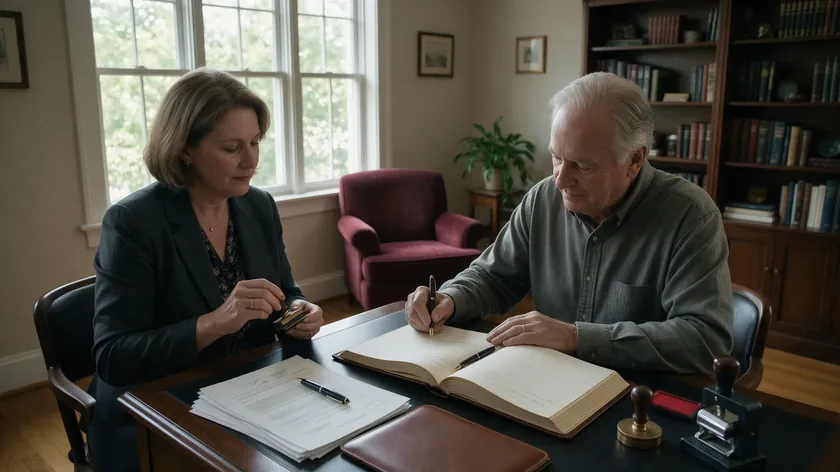
Getting the notarization right is a straightforward process, but each step matters. Here is a practical walkthrough of what to do.
A power of attorney must be signed by the principal, and the principal must date the power of attorney upon signing. The form should be fully completed before the notary appointment, including any specific language about the agent’s authority, successor agent designations, and the scope of financial decisions or medical power the agent will hold. Do not sign the document before you arrive.
The principal must appear personally before the notary, be mentally competent, and act voluntarily without undue influence. Bring a valid government-issued photo ID, such as a driver’s license or passport.
The notary public verifies the principal’s identity, watches the principal sign, and then completes their certificate and applies their official seal. In some states, the attorney in fact may also need to sign and be notarized.
You can find notaries at banks, credit unions, law offices, UPS or mailbox stores, courthouses, and city offices. Mobile notaries will come to your home or a hospital if the principal cannot travel.
After notarization, do not staple, alter, or remove any pages from the notary’s section. Make copies of the fully executed, notarized durable POA for the agent and key institutions, and store the original in a secure location that authorized persons can easily access.
Remote Online Notarization (RON) for Powers of Attorney

Remote online notarization allows a principal to meet a notary via a live audio-video session. The notary verifies identity through credential analysis and knowledge-based authentication, then applies a digital seal to the attorney document.
As of 2026, 49 states plus Washington, D.C. have effective RON laws, enabling notaries to perform remote notarization via secure technology. However, a few states still restrict or prohibit RON for certain documents, including some health care directives and real estate instruments.
The typical RON process works like this: upload your POA form, verify your identity through credential analysis, meet the notary on video, e-sign the document in the principal’s presence on camera, and receive a digitally notarized file. The whole process often takes under 30 minutes.
RON is especially valuable for seniors, people with disabilities, or those living abroad who need a U.S. durable power of attorney notarized quickly.
Before relying on RON, confirm that your state, the relevant land records office, and key financial institutions will accept a remotely notarized POA. California’s RON law is enacted, but full implementation is not expected until January 1, 2030.
Recording a Notarized Power of Attorney With the Land Records Office
Recording a POA is different from notarizing it. Recording mainly matters when the attorney in fact will handle real estate transactions on the principal’s behalf.
Some states mandate recording a POA at the county land records office or recorder’s office if it authorizes the agent to sign deeds, mortgages, or property transfers.
Even where recording is optional, filing the notarized POA can reassure title companies, lenders, and buyers that the agent’s authority is legitimate and legally valid.
To record, obtain a notarized original, ensure it meets county formatting rules for margins, font size, and property description, pay a small recording fee, and retrieve a file-stamped copy.
Revoking a recorded durable POA may require recording a notarized revocation document, especially if the original agent’s authority over real property must formally end on a future date or upon certain conditions.
Institutional Policies: Banks, Insurers, and Health Care Systems

Institutions often apply stricter rules than state law and can reject a technically valid but non-notarized POA. Understanding these policies before you need to act on behalf of someone else can prevent costly delays.
Banks and Financial Institutions
Financial institutions commonly insist on a notarized durable financial POA and sometimes require their own form to be completed and notarized.
A general power or durable power that is not on the bank’s own form may trigger additional review. Some banks refuse POAs signed more than five to seven years ago, even if still legally binding.
Insurers and Brokerage Firms
Insurers and brokerage firms may require a fresh notarized certification or an attorney’s opinion letter before allowing large transfers or beneficiary changes under a POA.
They often scrutinize the legal authority granted and may insist on seeing the original notarized document rather than a copy.
Hospitals and Health Care Systems
Hospitals and health care systems usually focus on health care POAs and advance directives. These documents may favor witnesses over notarization in many states, but hospitals still often accept notarized documents as more reliable proof of the agent’s authority to make health care decisions at the principal’s direction.
Principals should share copies of the finalized notarized POA with key financial institutions, health care providers, and other institutions in advance so the agent can easily access accounts and make decisions without delay when the time comes.
How Long Does a Notarized Power of Attorney Last, and When Does It End?
Notarization does not change how long a POA lasts. It only strengthens the document’s validity and acceptance by third parties.
The document itself controls when the agent’s authority begins and when it ends. A limited power may end on a set date, a temporary POA may expire after a defined period, and a durable POA survives the principal’s incapacity.
A springing power of attorney activates only upon the principal’s incapacity, not before. For more on these distinctions, see our “What Does Power of Attorney Mean?” guide.
All powers of attorney end at the principal’s death, so a notarized POA cannot be used to manage an estate afterward. Divorce, revocation, or the agent’s resignation can also cause a durable POA or limited power to terminate, and revocations often must be written and sometimes notarized. The POA’s legal effect ends under any of these conditions.
Encourage periodic review of an old notarized POA. Banks and other institutions may distrust forms signed more than five to seven years ago, even if the document remains legally valid. Refreshing the document ensures continued acceptance.
Practical Tips to Avoid Common Notarization Mistakes
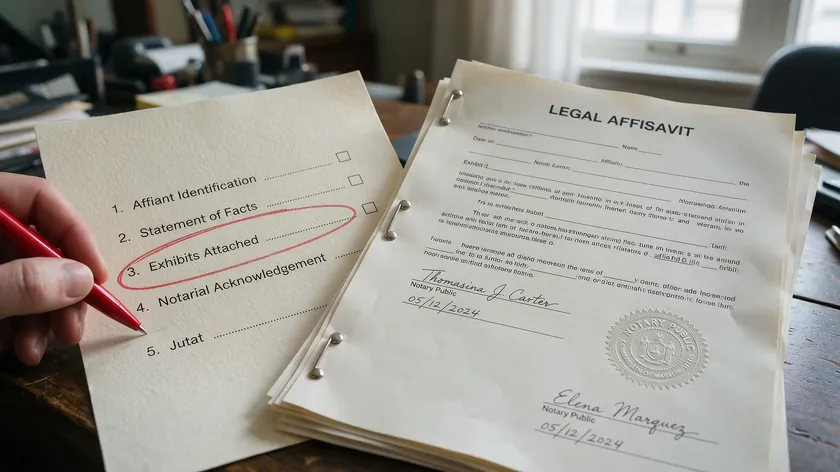
Small technical errors can make a power of attorney unusable at the worst possible time. Paying attention to detail during execution saves significant trouble later.
Common pitfalls include signing before you see a notary, which generally results in refusal of notarization. Using nicknames or abbreviations that do not match your ID can cause the notary to reject the document.
Missing required witness signatures, or having the wrong person act as witness, invalidates the POA in states that require two witnesses. Failing to notarize where real estate is involved blocks recording entirely.
Make sure the same version of the attorney form is signed by all parties, including the principal and the attorney in fact. Each notarization block must be fully completed and dated.
Witnesses must be adults and not related to the principal, and they cannot be a person named as an agent or successor agent.
People sometimes confuse notarization with legal review. A notary does not give legal advice, confirm that the POA language is appropriate, or establish an attorney client relationship.
Notarization only verifies identity and willingness. This distinction matters because a notarized POA could still contain flawed authority language.
Consult a lawyer when significant assets, complex family structures, or multi-state property are involved. This is general information, not legal advice, and certain requirements in your state may differ from what is described here.
Key Takeaways
- Most U.S. states require notarization for durable financial powers of attorney to be legally binding and accepted by banks, government offices, and other institutions.
- Some states, like California, allow either notarization or two witnesses for validity, while New York requires both a notary and witnesses (the notary can serve as one of the two).
- A non-notarized POA may be rejected by financial institutions, a land records office, or health care systems, even if it is technically valid under your state’s statute.
- Notarization is mandatory in nearly every jurisdiction for powers of attorney granting authority over real estate transactions.
- Remote online notarization (RON) is now authorized in 49 states and Washington, D.C., making it one of the fastest ways to get a durable POA notarized from home.
Ready to create a state-compliant power of attorney? You can generate your document at Documentify, then take it to a notary public as a separate final step to complete the process and make it ready for immediate use.
FAQ
The questions below cover practical edge cases and special situations not fully addressed in the main sections above. Each answer is kept brief and focused on actionable guidance.
Can I notarize a power of attorney if the principal can’t physically sign?
Many states allow the principal to direct another adult to sign on their behalf in the notary’s presence, as long as the principal is still mentally competent and physically present.
Hospitals and nursing homes often have mobile notaries experienced with signature-by-mark or proxy signing. Check your state’s specific rules about accommodations for disabilities before the appointment.
Will a power of attorney notarized in one state work in another state?
Many states honor out-of-state POAs if they were validly executed under the law of the state where they were signed. Many states that have adopted the Uniform Power of Attorney Act specifically recognize powers of attorney validly executed in another state, and a notarized POA is generally easier for local institutions to accept than an unnotarized one.
Recording requirements and real estate rules typically depend on the property’s location, not where the POA was signed. If you move or buy property in another state, consider creating a locally compliant durable POA as well.
Can I add notarization later to an already signed power of attorney?
A notary can only certify a signature made or acknowledged in their presence. They cannot backdate or retroactively notarize an old signature.
If notarization was missing but required, the safer approach is to sign a new POA correctly in front of a notary and any required witnesses. Institutions are likely to insist on a freshly executed, properly notarized document rather than trying to repair a defective one.
Do I need a separate notarized power of attorney for health care decisions?
Some states use a separate health care POA or advance directive with their own witness or notarization rules. In several jurisdictions, two qualified witnesses are favored over notarization for health care proxies, especially in medical settings.
Follow your specific state’s form and consider pairing a financial durable POA with a health care directive for full coverage of both financial decisions and medical decisions.
Does notarizing a power of attorney give the notary any legal responsibility for the agent’s actions?
The notary’s role is limited to verifying identity and willingness at the moment of signing. They hold no legal authority over and bear no liability for how the attorney in fact later uses the POA.
The agent’s fiduciary duties run to the principal, not to the notary or institutions relying on the document. Complaints about misuse of a POA are handled through civil court actions, adult protective services, or law enforcement, not through the notary’s office.