
If you’re engaged or planning to get married, you’ve probably wondered how prenuptial agreements work. A prenup is not just a contract for the wealthy; it serves as a practical planning tool that can help you and your future spouse avoid financial uncertainty in the future.
Table of Contents
- How Do Prenuptial Agreements Work? (Quick Answer)
- What Is a Prenuptial Agreement (Premarital Agreement)?
- What Does a Prenuptial Agreement Typically Include?
- Who Should Consider a Prenup (And Why)?
- How State Law Affects Prenups: Community Property vs Equitable Distribution
- Protecting Children From a Prior Marriage and Other Family Interests
- What a Prenup Can and Cannot Legally Cover
- Spousal Support, Debts, and Lifestyle Clauses
- How to Create a Valid and Enforceable Prenup
- Changing or Canceling a Prenuptial Agreement After Marriage
- How Much Does a Prenup Cost, and Is It Worth It?
- Common Misconceptions and Emotional Roadblocks
- Key Takeaways
- FAQs About How Prenuptial Agreements Work
How Do Prenuptial Agreements Work? (Quick Answer)
A prenuptial agreement is a legally binding written agreement between two people planning to marry. It serves as a roadmap for what happens to money, property, and support if the marriage ends by divorce or death. The agreement only becomes effective once the couple is legally married.
In practice, the process works like a prenup: both partners list what they own and owe before the wedding; agree on what remains separate property versus marital property; set their own rules for property division and spousal support; and then sign with the formalities required by their state, such as witnesses or a notary.
Without a prenup, state law decides how assets and debts are divided. In a community property state, marital assets are typically split 50/50. In equitable distribution states, courts divide things “fairly” based on multiple factors. A prenup lets the couple decide for themselves in advance.
Quick example: Suppose Alex enters a 2026 marriage owning a house purchased in 2018 and carrying $30,000 in student loans. A properly drafted prenup could keep that house as Alex’s separate property and ensure the student loan debt stays solely with Alex, so the other spouse isn’t responsible for it in the event of a divorce.

What Is a Prenuptial Agreement (Premarital Agreement)?
A prenuptial agreement—also called a premarital agreement or prenup contract—is a written contract signed before marriage that specifies how assets, debts, property division, and spousal support will be handled during the marriage and if it ends. Prenups must be in writing to be valid.
Common legal elements include identification of each spouse’s premarital personal property, rules for what becomes community property or marital property after the wedding date, and instructions for dividing bank accounts, education savings, retirement accounts, and business interests on divorce or death.
Most states recognize valid prenups under the Uniform Premarital Agreement Act (UPAA), originally adopted in 1983. Its updated successor, the Uniform Premarital and Marital Agreements Act (UPMAA) from 2012, strengthens procedural safeguards.
These statutes set minimum requirements: voluntariness, full disclosure, fairness, and proper execution.
A prenup can also address what happens at death, coordinating with wills and estate plans. This is especially valuable when one spouse wants to protect inheritance rights for children from a prior marriage.
One important clarification: the prenup itself does not create the marriage. It sits “ready” and only has legal effect once the marriage license is issued and the ceremony is completed. A prenup can clarify property rights during marriage and divorce, but it remains dormant until you are legally married.
What Does a Prenuptial Agreement Typically Include?
Most prenuptial agreements cover five main areas: property, debts, spousal support, death and estate rights, and dispute resolution procedures. Here’s what each typically addresses:
- Premarital assets: homes, investments, retirement funds, businesses, and stock options
- Post-wedding income: whether earnings remain separate or become joint
- Property division: rules if the marriage ends, including buyout formulas and treatment of appreciation
- Debts: allocation of premarital and marital debts such as student loans, credit cards, and business loans
- Spousal support: whether alimony can be limited, waived, or calculated by a specific formula
- Inheritance: rights to inherit other property if a spouse dies, especially when children from a previous marriage are involved
Prenups typically list each person’s assets and debts in attached schedules, creating a clear financial snapshot at the time of signing.
Some personal provisions are generally acceptable—like pet custody arrangements or rules for maintaining a jointly purchased home. However, courts often strike down clauses that impose heavy penalties tied to intimate behavior, or they create enforceability risks.
The document should also explain how disputes will be resolved—through litigation in a particular state, mediation, arbitration, or other agreed processes. A severability clause is critical so that if one provision fails, others remain effective.
Who Should Consider a Prenup (And Why)?
Prenuptial agreements are no longer just for celebrities or the ultra-wealthy. They are common planning tools for anyone with property, debt, business interests, or family obligations they want to protect. Prenups are often used by individuals with significant assets or those with substantial debts.
Situations where a prenup is especially important include:
- One or both partners own a home, rental property, or a business before marriage
- There is a significant amount of income or wealth disparity between partners
- One or both have children from a prior marriage and want to protect inheritances
- A partner expects a large inheritance or ownership stake in a family company
- One spouse carries substantial student loan or credit card debt
Trend data backs up the growing popularity. According to recent surveys, 15% of Americans signed a prenup in 2022, up from 3% in 2010. About 50% of U.S. adults now express support for premarital agreements, even if most married couples still don’t have one.
Priorities also shift depending on the type of marriage. First marriages often focus on protecting separate property and setting spousal support expectations. Second marriages or remarriages tend to emphasize protecting children’s inheritance and preserving specific assets like family homes or businesses.
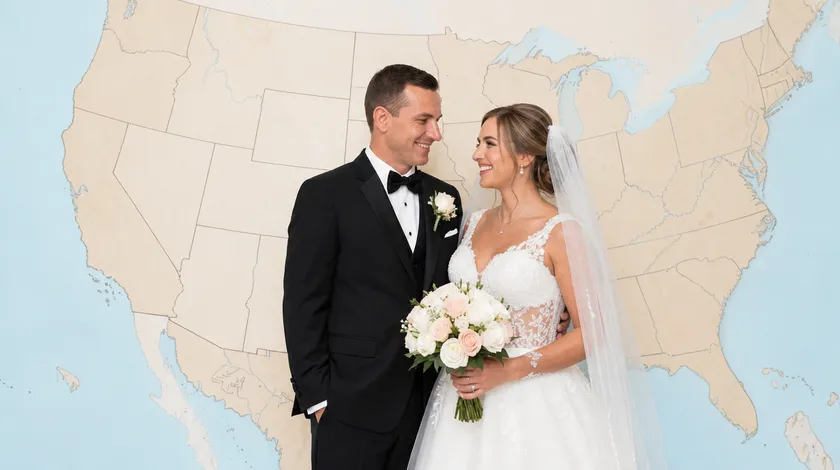
How State Law Affects Prenups: Community Property vs Equitable Distribution

Without a prenup, your state’s default rules control property division—either community property or equitable distribution. A valid prenuptial agreement lets couples choose different rules within legal limits. Prenups allow couples to override default state divorce laws.
Community Property States
Nine U.S. states have community property laws: Arizona, California, Idaho, Louisiana, Nevada, New Mexico, Texas, Washington, and Wisconsin. In these community property states, most property and income acquired during marriage is treated as jointly owned. In community property states, assets are split 50/50 without a prenup.
Separate property—what was owned before marriage, gifts, and inheritances—stays separate unless it gets mixed with marital funds. Debts incurred during the marriage are also typically shared.
Equitable Distribution States
The other 41 states plus D.C. follow equitable distribution. Under this framework, marital property is divided “fairly” but not necessarily equally. Courts consider statutory factors like the length of marriage; economic contributions, including homemaking; ages; health; and future earning capacity.
Example: Without a prenup, a small business started after marriage in a community property state would typically be shared equally at divorce. With a prenup specifying that the business remains one spouse’s separate property, that spouse would retain full ownership.
Prenups can override default state divorce laws regarding property division, giving couples control over outcomes that matter most to them.
Protecting Children From a Prior Marriage and Other Family Interests
Prenuptial agreements are crucial for blended families where one or both spouses have children from a previous relationship and want to protect specific assets for those children. Prenups can protect assets from previous marriages, keeping them within the intended family line.
A prenup can:
- Confirm that certain premarital assets (a 2015 home, a brokerage account, a family farm) remain separate
- Waive or limit a future spouse’s right to take a statutory share of the estate as a surviving spouse
- Coordinate with wills and trusts so that children and the surviving spouse are both provided for
Example: A parent remarrying in 2026 might use a prenup to keep a family business separate. They could also set up a trust so that children from the first marriage receive the business profits, while the surviving spouse still receives retirement accounts and a portion of other marital assets.
However, courts generally will not enforce prenups that attempt to dictate child custody or child support. These issues are always decided based on the child’s best interests at the time of separation, regardless of what any prenuptial contract says.
What a Prenup Can and Cannot Legally Cover
While couples have wide freedom to arrange financial issues through a prenup, there are hard legal limits—especially around children and public policy—that must be respected.
What a Prenup Can Cover
- Property division rules for marital and separate assets
- Treatment of business interests and professional practices
- Allocation of existing and future debts
- Spousal support (alimony) limits, waivers, or formulas
- Inheritance and estate rights between spouses
- Spousal support rights and spousal maintenance terms
- Choice of governing law and dispute resolution
What a Prenup Cannot Cover
- Final decisions on child custody and parenting time
- Binding child support amounts that undercut state guidelines
- Agreements that would leave one spouse destitute and reliant on public assistance
- Attempts to waive financial disclosure duties or future responsibilities to creditors
The agreement should be fair and not grossly unfavorable to either party to be enforceable. In a 2024 Georgia case, the court enforced most of a prenup but struck down portions that barred courts from considering separate property when determining alimony, finding those clauses against public policy.
Judges may set aside unfair prenups that don’t meet state requirements. Provisions that encourage divorce-like a large “bonus” for filing first-can be struck down and may jeopardize the entire agreement.
Spousal Support, Debts, and Lifestyle Clauses
Many people use prenuptial agreements to manage three sensitive topics: alimony and spousal support, responsibility for debts, and expectations around conduct—often called lifestyle clauses.
Spousal Support and Alimony
A prenup can set a cap, duration, or formula for spousal support. In some states, it can waive alimony entirely, subject to fairness review at the time of divorce.
Courts scrutinize spousal support waivers closely. California requires independent legal review for spousal support waivers in prenups, including specific statutory warnings. Failing to meet those requirements can render the waiver unenforceable.
Debt Allocation
Prenups can shield spouses from each other’s debts by specifying which debts remain separate and which will be joint. For example, a 2022 student loan can be kept solely with the borrower. Prenups protect against a spouse’s debts during divorce and can specify how debts incurred during marriage are handled.
Lifestyle Clauses
Lifestyle clauses attempt to regulate non-financial behavior: infidelity penalties, social media rules, limits on gambling or major purchases, and similar provisions. While many states allow such clauses under uniform premarital frameworks, courts view them skeptically in practice.
Extreme lifestyle or cheating clauses are frequently unenforceable and can undermine the seriousness of the entire agreement. If you want to include them, draft them carefully with advice from a family law attorney, and always include a severability clause.
How to Create a Valid and Enforceable Prenup
Enforceability depends more on process than on magic wording. Full and fair disclosure, voluntariness, fairness, and compliance with your state’s formalities are what matter most. Both parties must fully disclose all income, assets, and liabilities for a prenup to be valid.
Here’s the process in chronological order:
- Step 1: Start early. Begin the prenup conversation several months before the wedding—ideally 4–6 months in advance. The agreement should avoid being presented at the last minute to ensure voluntary consent and enforceability.
- Step 2: Exchange full financial disclosure. Both you and your partner should provide complete documentation: tax returns, bank statements, retirement balances, lists of assets and debts, and property valuations. This creates the financial disclosure foundation the agreement rests on.
- Step 3: Hire separate attorneys. Both parties should have separate legal counsel for prenups. Each partner should consult their own lawyer, a family law attorney familiar with state law. Having your own attorney and independent legal advice increases prenup enforceability in court.
- Step 4: Draft, negotiate, and revise. Work through the written terms until both you and your partner are comfortable. This is where you clarify expectations about property acquired during marriage, business interests, and support.
- Step 5: Sign properly. Execute the agreement in the manner required by your state—often notarization, sometimes witnesses. Make sure it’s a legally enforceable document.
Add a severability clause so that if one provision fails, the rest still stands. Include a choice-of-law clause identifying which state’s law governs if you later move. Courts may refuse to enforce a prenup signed at the last minute, without disclosure, without independent legal advice, or with provisions so one-sided they “shock the conscience.”

Changing or Canceling a Prenuptial Agreement After Marriage
Prenups are not necessarily permanent. Prenups can be amended after marriage with mutual consent, usually through a written, signed postnuptial agreement.
A postnuptial agreement works similarly to a prenup but is signed after the marriage date. It can:
- Update asset lists to reflect new property acquired together
- Change rules about spousal support or property division
- Correct terms that no longer feel fair because of major life events like children, illness, or big income changes
Example: A couple signed a basic prenup in 2020. In 2026, they start a business together. They execute a postnuptial agreement to reflect shared business income, adjust spousal maintenance terms, and account for their individual circumstances.
Changes must follow the same core rules: fair disclosure, voluntariness, and compliance with state formalities, often including notarization and legal counsel from separate lawyers.
How Much Does a Prenup Cost, and Is It Worth It?
The prenup cost varies widely based on complexity, location, and whether both partners hire attorneys. But the upfront expense almost always compares favorably to the cost of a contested divorce.
Typical cost ranges:
- Simple agreements (low assets, online template): a few hundred dollars to roughly $1,000
- Attorney-drafted agreements in major U.S. cities: about $1,500 to $5,000 or more per person, sometimes reaching a few thousand dollars per side when negotiations involve businesses and trusts
Prenups can simplify divorce proceedings and reduce disputes. Here’s how the legal costs compare:
| Scenario | Estimated Cost Per Spouse | Notes |
|---|---|---|
| No prenup (contested divorce) | $10,000–$15,000+ | Discovery, valuation experts, court litigation |
| With prenup (streamlined divorce) | $1,500–$5,000 | Key issues already resolved; less court time |
| Prenup drafting (upfront) | $1,500–$5,000 per side | One-time investment before marriage |
Actual figures vary by state, complexity, and 2026 market rates.
Think of a prenup as insurance: you hope never to “use” it, but it can save a significant amount of money, time, and emotional strain if the marriage ends or a spouse dies unexpectedly. Prenups can clarify financial rights and responsibilities during marriage, reducing uncertainty for both parties.
Common Misconceptions and Emotional Roadblocks
Discussing a prenuptial agreement can feel uncomfortable and “unromantic.” But many couples find that the process actually improves transparency and trust by forcing honest financial conversations early.
Common myths to dispel:
- “Only rich people need prenups.” Not true. Couples with modest incomes but student debt, a small business, or property acquired before the wedding benefit just as much.
- “A prenup means we expect to divorce.” Planning is not pessimism. You don’t buy car insurance because you plan to crash.
- “Prenups only protect the wealthier partner.” A well-drafted agreement protects both you and your spouse—especially the lower-earning partner who might otherwise have no say in how assets are divided.
- “Courts never enforce prenups anyway.” Courts frequently enforce fair, properly executed agreements in most states.
Tips for having the conversation:
- Choose a calm time well before the wedding—not during an argument or the week of the ceremony.
- Frame it as shared protection and mutual clarity, not as a threat.
- Listen carefully to what your partner wants to protect—whether it’s a 401(k), a future home, children’s college funds, or one spouse’s business.
Writing down what you each want to protect before meeting with your own attorney makes the discussion more constructive and less emotional.
Key Takeaways
- A prenuptial agreement is a written contract signed before marriage that sets out how assets, debts, property division, and spousal support will be handled if the marriage ends by divorce or death.
- Prenups let couples override default state rules—including community property laws—and are especially useful if you have significant assets, a prior marriage, children from a previous relationship, or major debt you want to protect against.
- Child custody and child support cannot be locked in by a prenup. Courts must decide those issues based on the child’s best interests at the time of separation. Extreme or punitive lifestyle clauses may do more harm than good from a legal perspective.
- For a valid prenuptial agreement to hold up, both partners must give full financial disclosure, sign voluntarily well before the wedding, and ideally each have their own family law attorney.
- Taking time to plan these financial issues in 2026—before walking down the aisle—can actually strengthen the relationship by reducing anxiety about the future. A prenup isn’t about expecting the worst. It’s about building a foundation of clarity and mutual respect.
Start your customized document in minutes: Generate prenuptial agreement online, then bring the draft to your attorney for fine-tuning.
FAQs About How Prenuptial Agreements Work
These questions address practical issues that often come up but may not have been fully covered above.
Do I Need a Lawyer to Make a Valid Prenup?
While a few states do not absolutely require attorneys, having separate family law lawyers for each partner is strongly recommended and often critical for enforceability. This is especially true where spousal support is being limited or waived.
Judges are more likely to enforce an agreement when both sides had independent legal advice and each party acknowledged understanding the terms. Going without your own lawyer is one of the easiest ways to have a prenup challenged later.
When Should We Start Talking About a Prenup Before the Wedding?
Couples should begin discussing and drafting a prenuptial agreement several months before the wedding—ideally at least 3–6 months in advance. This removes any suggestion of pressure or duress.
Last-minute prenups signed days before the ceremony are far more vulnerable to legal challenge, especially if one spouse felt they had no realistic option to walk away or negotiate terms.
Can We Decide What Happens to Our Pets in a Prenup?
In most U.S. jurisdictions as of 2026, pets are still legally treated as personal property. This means couples can include provisions in a prenup for “pet custody”—who keeps the dog and who pays veterinary bills and insurance.
While courts often respect these clauses, a judge may still modify them if they conflict with local law or if circumstances change significantly after the agreement was signed.
Is a Prenup Still Valid If We Move to Another State or Country?
Many prenups include a choice-of-law clause stating which state’s law will govern, which helps if the couple relocates. However, other states or countries might still apply their own public policy rules.
If you move to a new jurisdiction with very different family law—especially from a U.S. state to a foreign country—review and possibly update the agreement with a local attorney to make sure it remains legally enforceable.
What if My Fiancé Refuses to Sign a Prenuptial Agreement?
No one can be forced to sign a prenup. A valid agreement must be voluntary—pressure or threats make it unenforceable.
If your partner refuses, consider alternatives such as adjusting your personal financial plan, using separate property and estate planning tools like trusts, or consulting a counselor or mediator. Often, the resistance comes from misunderstanding what a prenup does. A calm conversation about what both you and your partner want to protect can go a long way.