
This guide walks you through how to get a power of attorney in Texas step by step—from choosing a trusted person as your agent and selecting the right type of POA to completing the correct Texas form, signing it before a notary public, and putting it to work with banks and hospitals.
Whether you need a statutory durable power of attorney for property and financial decisions or a separate medical power of attorney for health care, every step below is grounded in Texas law.
Table of Contents
- How to Get Power of Attorney in Texas: Quick Step-by-Step Overview
- Step 1: Decide Which Texas Power of Attorney You Need
- Step 2: Confirm You and Your Agent Qualify Under Texas Law
- Step 3: Choose and Download the Right Texas Power of Attorney Form
- Step 4: Fill Out the Texas Power of Attorney Form Correctly
- Step 5: Sign, Notarize, and Witness Your Texas POA Properly
- Step 6: Store, Share, and Use Your Texas Power of Attorney
- What If a Texas Bank or Institution Questions Your Power of Attorney
- Getting a Texas Power of Attorney Online
- How Texas Medical Power of Attorney and Living Will Fit Into Your Plan
- Wrap-Up: Using Your Texas Power of Attorney Over Time
- Key Takeaways
- FAQ
How to Get Power of Attorney in Texas: Quick Step-by-Step Overview
Before diving into the details, here is the Texas process at a glance, from deciding what you need to using the signed document with banks and hospitals.
- Step 1: Decide what you need. Determine whether the agent will handle financial decisions, real estate, everyday banking, medical decisions, or a single specific matter. Then decide whether you need a general power, limited power, or durable power of attorney.
- Step 2: Choose a qualified agent. Pick a trustworthy adult who is mentally capable and willing to act. Consider naming one or more successor agents in case your first choice cannot serve.
- Step 3: Select the correct Texas form. Use the Texas statutory durable power of attorney form for property and finances, a separate Texas medical power of attorney for health care, or a narrow limited power of attorney for a one-time transaction.
- Step 4: Fill out the form. Enter full legal names, addresses, the effective date (immediate or springing), the scope of powers granted, and any limits on agent authority.
- Step 5: Sign properly. A statutory durable power of attorney must be acknowledged before a notary public. A medical power of attorney requires either notarization or two witnesses under Texas law.
- Step 6: Distribute and store. Make copies for your agent and relevant institutions, store the original in a safe but accessible location, and update or revoke the document if your life circumstances change.
Later sections expand each step with Texas Estates Code references, links to official Texas power of attorney forms, and practical tips for avoiding common mistakes.
Step 1: Decide Which Texas Power of Attorney You Need

This section helps you match your situation to the right type of Texas POA. If you need a refresher on the basics, our guide to what a power of attorney means covers them. Here, the focus is entirely on Texas-specific options.
Texas law lets you choose how much authority to grant and when it starts. For a broader comparison beyond Texas, see this overview of different types of power of attorney. The options below cover most situations.
- General power of attorney. Grants broad authority over property and financial decisions—banking, investments, bill-paying, and similar tasks. However, it usually ends if the principal becomes incapacitated unless it is specifically made durable.
- Durable power of attorney. A durable power of attorney remains effective if the principal becomes incapacitated. In Texas, it is typically created using the statutory form found in the Texas Estates Code. For a closer comparison, see durable power of attorney vs power of attorney.
- Limited power of attorney. Grants authority for specific tasks only—for example, authorizing someone to close a real estate sale, manage a single bank account, or sign tax documents on the principal’s behalf. It usually includes an end date or expires once the task is complete.
- Springing power of attorney. A springing power of attorney takes effect only when the principal becomes incapacitated, as certified by a physician. Texas law allows this, but some banks ask for a physician’s written statement before accepting a springing document.
- Medical and health care documents. A medical power of attorney lets an agent make health care decisions, while a living will (Directive to Physicians) addresses end-of-life care. These advance directives fall under the Texas Health and Safety Code, not the Estates Code, and are separate from any financial POA.
Consider whether you need more than one document. Many Texans create a statutory durable power of attorney for finances, a medical power of attorney for health care decisions, and a living will for end-of-life choices.
Deciding between general, limited, and durable powers early makes the rest of the process much smoother.
Step 2: Confirm You and Your Agent Qualify Under Texas Law

The Texas Estates Code sets baseline rules for who can sign a power of attorney (the principal) and who can serve as an agent. Skipping this step can result in a document that courts or institutions refuse to honor.
Who Can Sign a Texas Power of Attorney (the Principal)
In Texas, the principal must be an adult of sound mind who understands the nature and effect of the document and acts voluntarily, free from duress or undue influence.
If someone is already incapacitated and unable to manage their own affairs, they generally cannot sign a valid Texas power of attorney. In that situation, a court-appointed guardian may be needed. Our guide on getting power of attorney for an elderly parent covers that scenario in more detail.
Who Can Serve as Your Agent in Texas
The agent must be a competent adult who is willing to act.
For a medical power of attorney, Texas law bars the principal’s physician or other health care provider, their employees, and the principal’s residential care provider from serving as agent, unless the person is a relative of the principal.
Choose someone with the financial literacy to handle property and financial tasks, or someone who understands your medical values if you are granting health care decision authority.
Name one or more successor agents in your power of attorney form. If the primary agent dies, resigns, or becomes incapacitated, a backup ensures continuity without needing a new document.
Texas law treats the agent as a fiduciary when acting under the power. That means keeping the principal informed, keeping records of transactions, and being ready to account for them.
Texas courts and third parties rely heavily on the principal’s mental condition at signing and the agent’s integrity going forward, so this step should not be rushed.
Step 3: Choose and Download the Right Texas Power of Attorney Form

Texas-specific wording matters. A durable power of attorney that omits the required durability language—or uses another state’s template—may be rejected by a title company or bank. Using Texas-specific forms reduces that risk.
Official Texas Forms and Where to Find Them
The statutory durable power of attorney form is set out in Texas Estates Code § 752.051. It includes a notice to the principal, a list of power categories the principal initials, a choice about when the authority takes effect, and special instructions that cover agent compensation and gifts.
Texas sources publish official power of attorney forms online. You can find them through the Texas State Law Library guide, TexasLawHelp.org, and other reputable sources. Always verify that the form is current and labeled as a Texas statutory durable power of attorney if durability is needed.
Use separate power of attorney forms for separate purposes: one for property and financial decisions (statutory durable), one for medical decisions (Texas medical power of attorney form with the required disclosure statement), and a narrow limited power for a one-time event like a DMV transaction.
Free power of attorney forms for Texas do exist online, but verify that they reference Texas law and not another state, especially for durable powers and advance directives.
Preparing Your Form With Documentify
Documentify’s online generator walks you through selecting general, durable, or limited powers and then produces a customized power of attorney form you can sign and notarize in Texas. It asks targeted questions about agent authority, effective dates, and scope so key details are not overlooked.
Complex estates, special-needs planning, or unusual asset structures may justify having a Texas attorney review the chosen form even if it was prepared online. A legal hotline or brief attorney consultation can catch issues a template might miss.
Picking a correct, Texas-tailored power of attorney form is essential to avoid rejection by banks, title companies, or hospitals down the line.
Step 4: Fill Out the Texas Power of Attorney Form Correctly

This section walks through the main clauses you will see on a Texas POA, especially the statutory durable power of attorney form. The document must clearly state the powers granted to the agent, because vague or blank sections can lead to disputes later.
Principal and Agent Information
Enter the principal’s full legal name, mailing address, and—if the form requests it—driver’s license or state ID number. These details should match your identification exactly.
List the agent’s full name, address, and contact details, plus any successor agents in the order they should serve.
Choosing and Limiting the Powers Granted
On the statutory form, the principal initials next to each category of powers—real property, banking, taxes, insurance, business operations, and more—or initials the line for all of the powers listed. Powers you leave uninitialed are not granted.
The special instructions section lets you address agent compensation, whether co-agents may act alone, and gifts. Blank lines let you add limits or extra authority for specific transactions.
Durability and Effective Date
The statutory form is a durable power of attorney. It lets you choose between two options: authority that is not affected by later disability or incapacity, or authority that becomes effective only on disability or incapacity. If neither option is crossed out, the first one applies.
Under the second option, incapacity is generally shown by a physician’s written certification, unless the document defines it differently. Removing or altering the statutory durability language can mean the document no longer qualifies as durable under Texas Estates Code § 751.0021.
Optional Clauses and Key Fields at a Glance
The statutory form offers two choices on agent pay: reimbursement of expenses plus reasonable compensation, or reimbursement only. Below is a quick-reference table of the key fields to complete.
| Field | What to Fill In | Why It Matters |
|---|---|---|
| Principal info | Full legal name, address, ID number | Must match bank and title records |
| Agent info | Name, address, successor agents | Determines who can act on the principal’s behalf |
| Scope of powers | Initial each granted category or the all-powers line | Only the powers you initial are granted |
| Effective date | Not affected by incapacity, or effective only on disability or incapacity | Controls when the agent’s authority begins |
| Durability clause | Keep the statutory language intact | Without it, the document may not qualify as durable |
Proofread the completed power of attorney form before signing. Make sure initials, signatures, and dates are consistent, and that names match IDs and bank records. Even a small mismatch can trigger delays.
Step 5: Sign, Notarize, and Witness Your Texas POA Properly
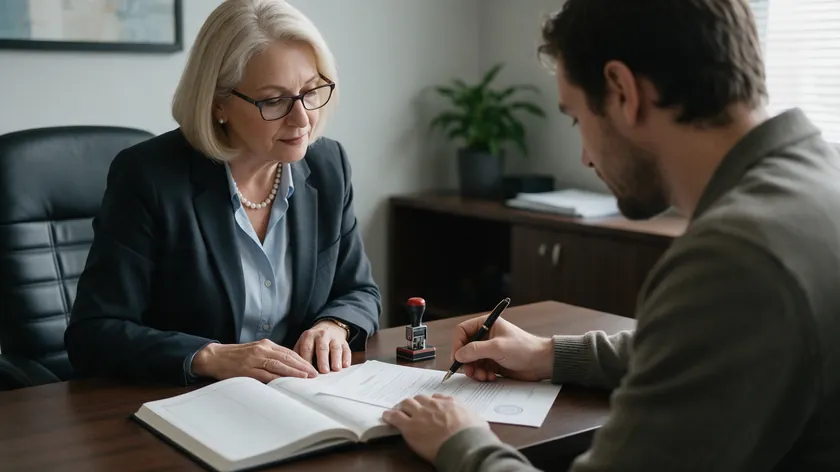
In Texas, the way you sign the document is just as important as what it says. Both financial and medical POAs must be executed according to Texas statutory requirements to be valid.
Notarizing a Texas Statutory Durable Power of Attorney
A Texas durable power of attorney must be acknowledged by the principal before an officer authorized to take acknowledgments, which in practice means a notary public.
The notary verifies identity, watches the signature, and completes the notarial certificate. For a deeper look at general rules, see our guide on whether a power of attorney needs to be notarized.
The agent usually does not need to sign the durable power of attorney at the time of execution, but some forms include an optional agent’s certification section that the agent can complete later when presenting the document to institutions.
Signing Rules for a Texas Medical Power of Attorney
A Texas medical power of attorney must be signed before two witnesses or acknowledged before a notary public.
If you use witnesses, at least one must be a qualified witness under Texas Health and Safety Code chapter 166: not the agent, not related to the principal by blood or marriage, not entitled to part of the estate, and not the attending physician or a health care facility employee providing direct care.
Special Situations and Common Signing Mistakes
If the principal is physically unable to sign, Texas allows another adult to sign at the principal’s direction in the principal’s conscious presence. That signature must still be acknowledged before a notary or witnessed as the form requires.
Avoid signing incomplete forms. Date every signature. Never detach or alter the statutory notices and disclosure statement attached to Texas POA and advance directive forms, since doing so can lead to rejection.
A POA that is not properly signed and acknowledged may be rejected by banks, title companies, or health care providers in Texas, so treat this step as non-negotiable.
Step 6: Store, Share, and Use Your Texas Power of Attorney

A signed Texas POA is only useful if the right people can see and rely on it when an event like incapacity or an emergency arises.
Storing and Sharing Your Documents
Keeping the original secure and accessible is important for practical use. Store it in a home safe or fireproof file rather than a sealed safe-deposit box that only you can open.
Give the agent at least one physical copy plus a scanned PDF so they can present it quickly to banks, brokers, or other institutions acting on the principal’s behalf.
Provide copies of your medical power of attorney and living will to your primary care physicians, any hospital you use regularly, and close family members involved in your health care decisions.
Putting It to Use and Keeping It Current
Contact your bank or title company in advance to explain that you have a power of attorney and ask about their internal review process. Submit a copy early so the file is already on record if an emergency strikes.
Some entities may ask the agent for an agent’s certification under Texas Estates Code § 751.203—a sworn statement on factual matters, such as whether the power has been revoked. Being ready to provide one can prevent delays.
Update your POA after major life events: marriage, divorce, a move to a new county, a change of primary bank, or the death of a named agent. Revoke older powers that are no longer appropriate.
Clear communication with your agents and institutions from the start avoids confusion when the power of attorney needs to be used in an emergency.
What If a Texas Bank or Institution Questions Your Power of Attorney

Texas law addresses how third parties should handle a durable power of attorney, but in practice, principals and agents may still face questions or delays.
What Texas Law Says About Accepting or Rejecting a POA
Under the Texas Estates Code, a person presented with a durable power of attorney can ask for an agent’s certification or an opinion of counsel within 10 business days.
After receiving it, the person generally has 7 business days to accept the document or give the agent written reasons for refusing.
The law lists specific grounds for refusal, including knowing that the power has ended, a good-faith belief that it is invalid or that the agent lacks authority, pending court proceedings, or a report of abuse or exploitation.
What to Do If a Bank Hesitates
Politely point out that the document is a Texas statutory durable power of attorney, offer to show the original, and ask the institution to put any objections in writing.
If the POA is a springing power, keep a copy of the physician’s letter certifying the principal’s incapacity. Institutions may request a physician’s written statement before honoring a springing document.
If a third party wrongly refuses a proper POA, Texas law may provide remedies. Consider contacting a Texas attorney for advice on enforcement options.
Recording Your Power of Attorney for Real Estate Transactions
If a durable power of attorney is used in a real property transaction that requires recording, Texas Estates Code § 751.151 requires filing it with the county clerk where the property is located, no later than 30 days after the related instrument is filed.
Using the Texas statutory language and following notarization rules gives your POA the best chance of being accepted everywhere it is presented.
Getting a Texas Power of Attorney Online

Many Texans search for how to get power of attorney in Texas online and want a legally workable document without visiting a lawyer’s office. The form-preparation step can happen digitally, but the document still has to be signed and acknowledged as Texas law requires.
- You can download a Texas statutory durable power of attorney form or a Texas medical power of attorney form directly from official Texas websites, fill it in on your computer, and then print it for signing and notarization.
- Some Texas legal aid resources, such as TexasLawHelp.org, offer guided kits for certain documents, but you still must complete the signing and notarization steps the law requires.
- Documentify’s online power of attorney generator works similarly: answer a series of questions about general power vs durable power, property vs health care decisions, and limited powers, then download a completed document tailored to your responses.
- Regardless of how the form is created—downloaded PDF, online interview, or document generator—Texas law still requires a durable power of attorney to be acknowledged before an authorized officer such as a notary, and a medical power of attorney to be notarized or signed before qualified witnesses.
- Avoid out-of-state templates or generic power of attorney forms that do not mention Texas law. These may not satisfy Texas Estates Code requirements or could be rejected by local institutions that expect Texas-specific forms and language.
Online tools can make the process faster and clearer, but they do not replace the need for proper signing and—when the situation calls for it—individualized legal advice.
How Texas Medical Power of Attorney and Living Will Fit Into Your Plan

A statutory durable power of attorney for property and financial decisions does not automatically cover medical decisions in Texas.
- A Texas medical power of attorney is an advance directive that designates an agent to make health care decisions when you cannot speak for yourself. It is governed by the Texas Health and Safety Code, not the Estates Code.
- This document is separate from a general power of attorney or statutory durable POA. The statutory financial form states that it does not authorize health care decisions, even if the same person is named as agent on both documents.
- A living will—formally called a Directive to Physicians and Family or Surrogates in Texas—sets out your wishes for life-sustaining treatment and end-of-life care. It works alongside, not inside, the medical power of attorney.
- Texans who complete a durable power of attorney for finances should also consider completing a medical power of attorney and living will to cover both financial and health care decisions.
- For a general walkthrough of the process, see our guide on how to get a medical power of attorney, but remember to use Texas-compliant forms with the proper disclosure statement.
A complete Texas estate and incapacity plan usually includes at least one financial POA plus one or more health care advance directives. Doctors, hospitals, and family members will all benefit from having clear instructions in place.
Wrap-Up: Using Your Texas Power of Attorney Over Time
By this point you have learned how to choose, create, sign, and use a Texas power of attorney form—whether for property, finances, or health care.
- Review your powers of attorney periodically. Laws, finances, relationships, and your health can all change over time in Texas.
- A competent principal can revoke a power of attorney at any time. Notify your agent and every institution that received a copy. Our guide on how to revoke a power of attorney covers the detailed process.
- Remember that a power of attorney ends at the principal’s death. Other documents—like wills and trusts—then control the estate. See power of attorney after death for what happens next.
- Keep a simple “incapacity plan” checklist noting where your POAs and advance directives are stored and who needs copies.
The best time to create a Texas POA is while you are still healthy and able to decide for yourself. Download a Texas statutory durable power of attorney form or start an online questionnaire today—waiting until a crisis often makes the process far more complicated.
Key Takeaways
Here is a practical recap of the most important points from this guide.
- Pick the right kind of Texas POA—general, limited, or durable—and use state-specific language from the Texas Estates Code so third parties cannot question the document’s validity.
- Notarization is mandatory for the Texas statutory durable power of attorney and strongly recommended for other financial POAs. Without it, banks and title companies may refuse to act.
- Medical powers of attorney and living wills sit alongside, not inside, the main financial POA and require their own forms and execution rules under the Texas Health and Safety Code.
- Banks and other institutions are more likely to honor a Texas statutory durable power of attorney that is current, clear, and properly executed—complete with the agent’s certification if requested.
Do not wait until a crisis to act. Once the principal is incapacitated, creating a valid Texas power of attorney is generally no longer possible, and the only remaining option may be a costly court-supervised guardianship.
Ready to get started? Build a customized power of attorney in minutes with Documentify’s power of attorney generator: answer a few questions, download your document, and sign it before a Texas notary. If your situation is complex, consider having a Texas attorney review the final form first.
FAQ
Do I need a lawyer to get a power of attorney in Texas?
Texas law does not require hiring a lawyer to sign a power of attorney. Many people use the statutory form or an online tool to create the document themselves.
However, a lawyer can be valuable for complex estates, blended families, or situations involving concerns about abuse or undue influence.
Does a power of attorney have to be notarized in Texas?
A Texas durable power of attorney must be acknowledged before a notary public to be valid.
A medical power of attorney can be either notarized or signed before two witnesses, at least one of whom must be a qualified witness. In practice, notarization makes acceptance by institutions easier for both types of document.
How long does a Texas power of attorney last?
It depends on the document’s terms. Some POAs end on a set date written into the form, and non-durable POAs usually end if the principal becomes incapacitated.
A durable power of attorney remains effective during incapacity but, like all POAs, ends at the principal’s death. Our guide on how long a power of attorney lasts covers duration rules in greater depth.
Can I use a Texas power of attorney in another state?
Some other states may honor a Texas POA, especially a durable one executed under the Estates Code, but acceptance is not guaranteed.
If you move, consider re-signing documents using your new state’s forms after getting local information. Real property transactions in another state may require a document that complies with that state’s law.
Can I change or cancel my Texas power of attorney later?
A competent principal can revoke a Texas POA at any time. The safest approach is to put the revocation in writing and notify both the agent and any third parties that hold copies.
Signing a new power of attorney does not automatically revoke an earlier one unless the new document says so, so state that clearly.